aloha friends, listen up!
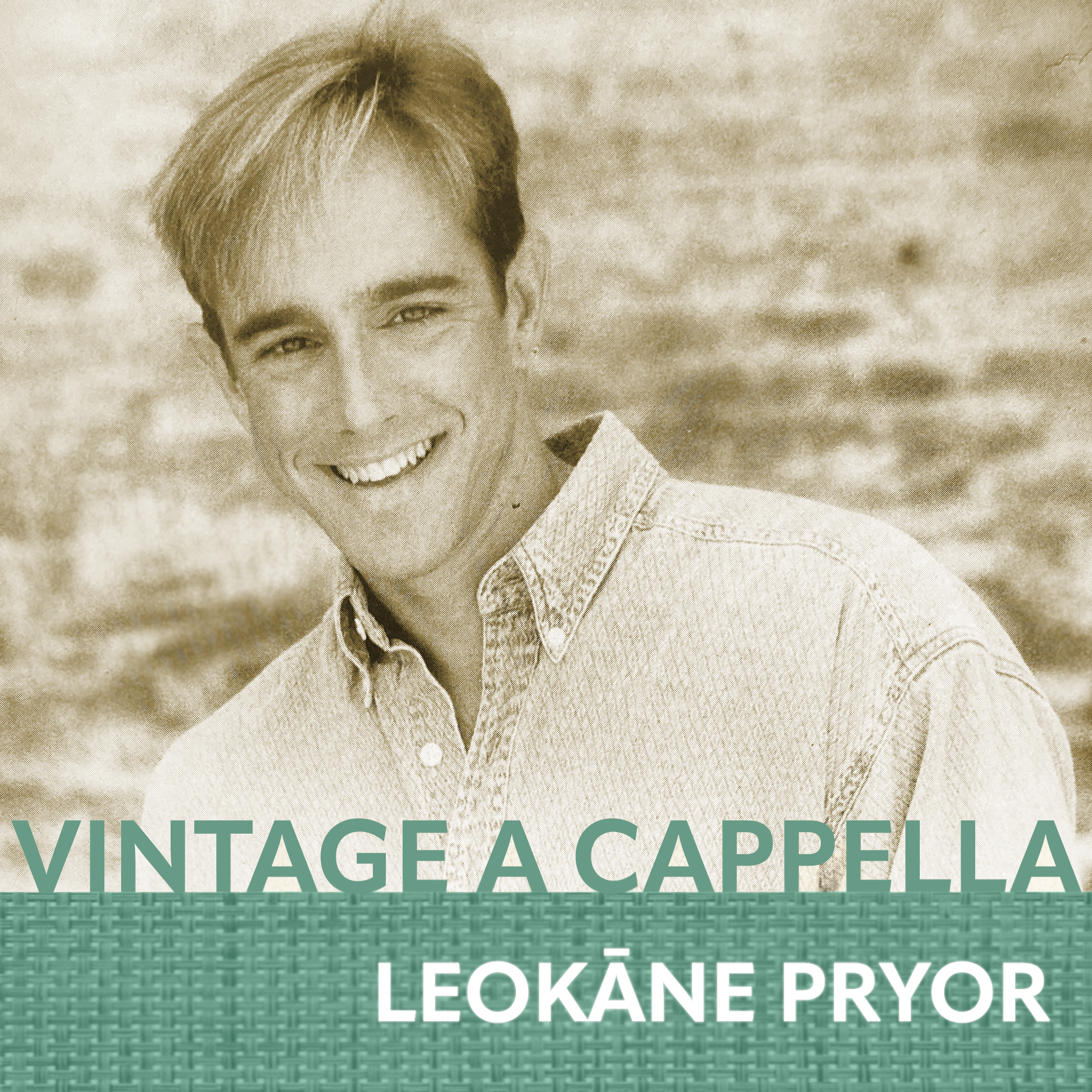
In early November, I started releasing my new album Vintage A Cappella. The album is a collection of ten a cappella songs recorded in studios in the late '80s and early '90s. Six songs were performed by the group 'FOUR', three by the group 'the delBecks!' and a single, "Why Can't We Be in Love" composed by my friend Kirk Livingston, and performed by me and Kirk! My a cappella days were incredibly special to me. They began with me singing with and directing the UC Men's Octet while at University.
Many of these studio-recorded songs only existed on dusty cassette tapes that had been boxed up for the last 35 years! I wanted to remaster these recordings to capture all the beauty and complexity of the original arrangements, and to share with the world the incredible vocal performances of so many incredible singers.
A cappella music allowed me to truly explore the art form of vocal harmony and balance, elements that I have woven into my Hawaiian music albums! I hope you enjoy!
LEARN MORE ABOUT EACH SONG
-
!["UP THE LADDER TO THE ROOF"]()
"UP THE LADDER TO THE ROOF"
This song is performed by the group, ‘FOUR’, featuring Anne Stone (soprano), Malathy Villar (alto), Wayne Dixon (bass), and Leokāne Pryor (tenor). Anne Stone takes the lead vocal on this track. Originally a 1970 hit single by, ‘The Supremes’ (post Diana Ross), the song was later covered by ‘The Nylons’, an exciting 1980s a cappella men’s quartet that helped launch a new wave of contemporary a cappella music. The Supremes' rendition inspired the arrangement for this version. ‘FOUR’ recorded this song for our first demo “tape” around 1988, using a one-inch reel before the era of digital recording. There was no pitch correction or digital fixing—this is exactly how we sang it. Anne Stone's performance was phenomenal, truly knocking it out of the park!
-
!["Dtift Away"]()
"Drift Away"
This 70’s classic was first released by Dobie Gray and became an international hit in 1973. The pop a cappella group the Nylons’, covered the song in the mid-80s. And 10 years after that ‘The delBecks!’ brought their own soulful R&B a cappella groove and vibe to the tune! ‘The delBecks!’ was a quintet of male vocalists, featuring Wayne Dixon (bass), Leokāne Pryor and Brad Hopper (baritone), Craig Matthews (second tenor), and Ahmed El-Gassier (first tenor). All members were alumni of the UC Men’s Octet, and their years of singing together at Cal are evident in the exceptionally tight harmonies captured in this recording. The arrangement even showcases overtones blending beautifully in the mix. Brad Hopper takes the lead vocal, killing it with his smooth cadence and sexy interpretation of the melody and lyrics!
-
!["Walk Away Renee"]()
"Walk Away Renee"
This epic ‘60s song was released by The Left Banke in July 1966. I fell in love with it on my 3rd birthday in July 1966! In the late ’80s, I heard the incredible a cappella group, ‘The Flips’, do a cover of this as a medley with another huge hit from 1966 - “Monday, Monday” by ‘The Mamas and the Papas’. I bought ‘The Flips’ cassette tape and played it over and over. In 1988, I decided to record this song in the studio with the group, ‘FOUR’. Years later, I became friends with one of the male singers in ‘The Flips’, Kirk Livingston (Tenor). And then I went on to sing with him in an a cappella group called, ‘Johnny Vocal’, which included Brad Hopper (Baritone) and Tom Tucker (uber Bass).
-
!["Do the Bird"]()
"Do the Bird"
This 1963 hit by the incredible Dee Dee Sharp holds a special place in my heart, as it was released the same year I was born! I loved working on this song with the talented singers in ‘FOUR’. The group’s two women, Malathy Villar (alto) and Anne Stone (soprano) brought their powerful chest voices to the mix, perfectly supporting Wayne Dixon’s soulful lead vocal as the bass. To this day, Wayne remains one of the best soul singers I’ve ever had the pleasure of hearing, and this recording only begins to capture his brilliance. When Wayne sang lead, I took on the bass part. Though I wasn’t a true bass, I put my heart and soul into every note!
-
!["Special Angel"]()
"Special Angel"
This crooner hit was first released by country singer Bobby Helms in 1957. It was re-released in 1963 by uber-crooner Bobby Vinton. Again, the year I was born. Coincidence? I think not! This 1963 version was what I listened to the most as a child and was key to my love affair with the ‘50s boy band sound. My arrangement, recorded by ‘The delBecks!’, captures the ‘50s sound—which were mostly songs from the early ’60s. And with this, my career as a velvety crooner was launched!
-
!["Georgy Girl"]()
"Georgy Girl"
In 1972–1973, I lived in Europe for a year while my dad was on sabbatical leave from teaching at Punahou School in Hawaii. As we drove all over Europe, we had a small cassette player in our car and somehow acquired a cassette of the British pop group, ‘The New Seekers’. They performed "Georgy Girl" (1972), which was originally released in 1966 by The Seekers as the title track for the 1966 film, Georgy Girl.
I fell in love with the harmonies on that album and learned to sing every part of every song. When singing with ‘FOUR’ and Malathy Villar, I wanted to arrange and record a song that would not only showcase her incredible vocal range but also highlight the depth of her lyric interpretation and the raw emotion she pours into every note.
-
!["TOO MANY FISH IN THE SEA"]()
"TOO MANY FISH IN THE SEA"
Not only did I fall in love with the harmonies and arrangements of 1950s boy groups, but I was equally captivated by the kick-ass harmonies and arrangements of girl groups. "Too Many Fish in the Sea," a 1964 hit by Motown girl group ‘The Marvelettes’, was one of my favorites. I loved not only the powerful singing but also the empowering message these women delivered to uplift other women. For our version, I decided Wayne should take the lead with his powerhouse Motown-esque vocal talent. Malathy and Anne brought the perfect balance, infusing the backup vocals with undeniable girl power!
-
![Leokāne Pryor's album cover for the song "Why Can't We Be In Love"]()
"Why Cant We Be In Love"
This piece was composed by Kirk Livingston. On this recording, Leokāne Pryor performs lead vocals, bass, baritone, and first tenor parts, while Kirk Livingston sings the second tenor part. Kirk originally introduced this song to a professional A Cappella quartet known as ‘Johnny Vocal’, which featured four male vocalists, including Brad Hopper as the baritone, and Tom Tucker (Bass). In the early 90’s we entered an A Cappella competition called "The Harmony Sweepstakes" and won best original song with "Why Can't We Be in Love".
The lyrics so poignantly tell of the heartbreak of breaking up with a lover, but it was the melody that touched my emotions. I added my harmonies to the arrangement and recorded the song in 1995 after leaving a five-year relationship.
The track was part of my jingle “demo tape” and it literally existed on a cassette tape!
15 years later, in 2008, I re-recorded this song, as a "Hawaiianized" version on my second Hawaiian album release Home Malanai. That version included Hawaiian instruments, but I still added the lush vocal arrangement of the original A Cappella version. Home Malanai was picked up by the Mountain Apple Company, Hawaii’s leading record label, which truly launched my career!
-
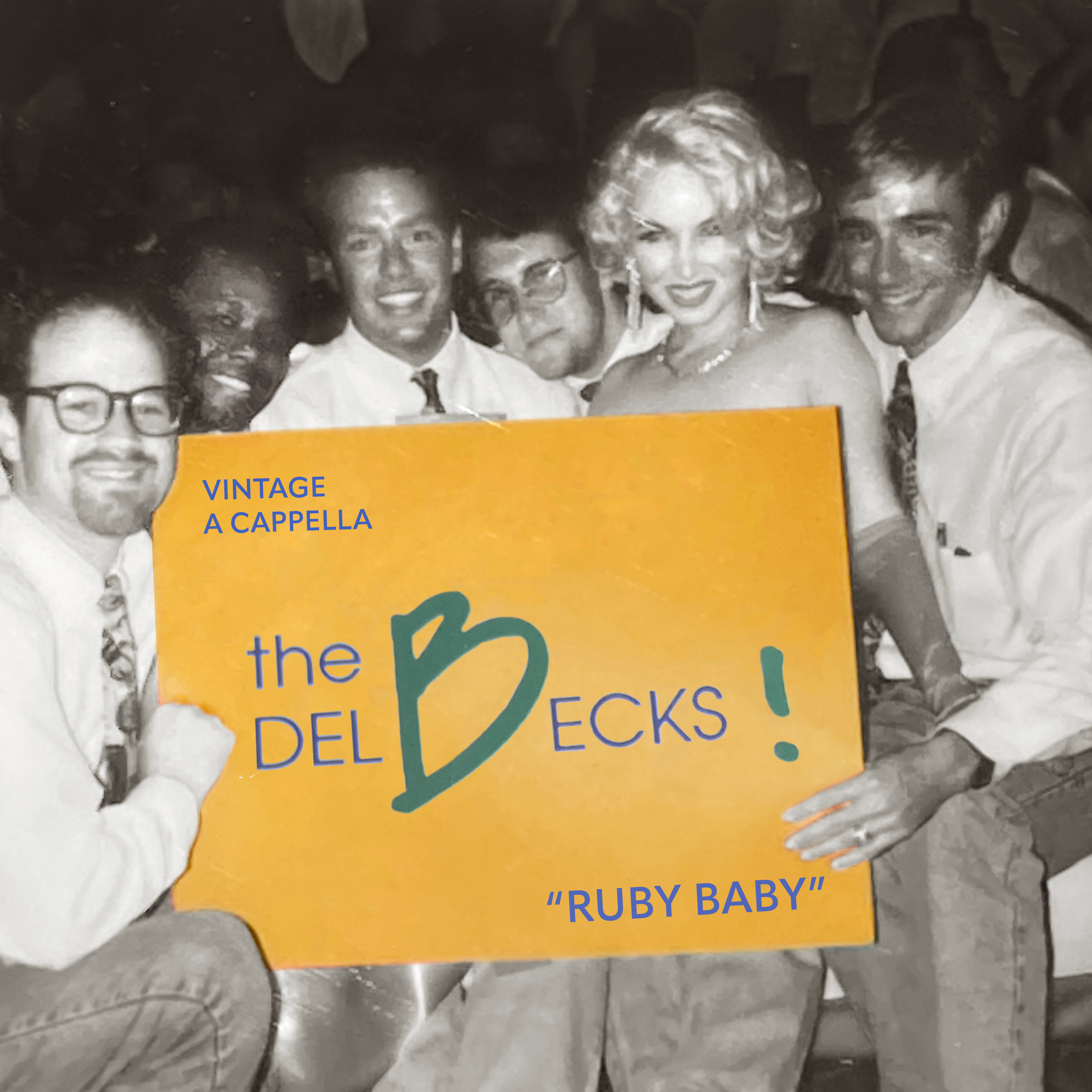
![The song "Ruby Baby" on Leokāne Pryor's new albulm, Vintage A Capella]()
"Ruby Baby"
This track showcases. ‘The delBecks!’, a talented five-man boy band from the early 90s. Originally recorded in digital format, the song has now been beautifully remastered for a fresh listening experience.
The lead vocal is performed by Wayne Dixon, a powerhouse vocalist with an unbelievable voice. Wayne, who was also a member of ‘FOUR’, chose a career in nursing over pursuing his immense talent in music. Now retired, his voice remains a hidden gem, and I’m thrilled to share it with the world through this recording!
-
!["Somewhere Over the Rainbow"]()
"Somewhere Over the Rainbow"
This 1939 classic was made famous by Judy Garland in the classic and timeless film The Wizard of Oz. I absolutely fell in love with this song as a child. Garland’s vocal were both powerful and fragile at the same time and captured a childhood innocence and belief in magic that is profoundly touching to the listener. When I first heard Anne Stone sing, her remarkable voice touched me in the same way, and this song needed her voice to interpret it anew—Anne Stone style. Aretha Franklin’s 1961 rendition added an element of melancholy that I knew Anne Stone could blend into her incredible vocals to create an entirely fresh rendition.



Leokāne Pryor
“There’s something incredibly powerful about creating harmony with nothing but the human voice. It’s about trust, collaboration, and a shared vision of what music can be. That’s the kind of harmony I’ve always tried to bring to my life, both in music and to those around me.”
